In recent years, ammonia (NH₃) has attracted growing interest as a carbon-neutral fuel, especially in the marine sector where internal combustion engines dominate. However, ammonia combustion presents challenges such as low flame speed, high ignition energy, and emissions of NOx, N₂O, and unburned NH₃. While various combustion strategies have been proposed for large engines, limited research addresses ammonia combustion in marine engines under low-load conditions.
This study investigates ammonia/diesel dual-fuel combustion in a marine engine at 25% load using numerical simulations. It focuses on the effects of injector positioning and ammonia injection timing on engine performance and emissions. Results show that placing the NH₃ injector 60 degrees from the diesel injector increases the swirl ratio by 32.52% and lowers the specific fuel oil consumption (SFOC) to 170 g/kWh, slightly better than the diesel baseline of 172 g/kWh. Emissions of N₂O and unburned NH₃ were nearly eliminated, while NOx and the equivalent greenhouse gas emissions dropped by 77% and 90%, respectively. Timing analysis further showed that synchronising the ammonia start of injection (SOI-NH₃) with diesel at -4° CA ATDC improved thermal efficiency by 3.76%. Conversely, a longer dwell time between injections led to incomplete combustion and higher N₂O and unburned NH₃ emissions. These findings provide key insights into optimising ammonia injector placement and timing, offering a foundation for designing cleaner, more efficient ammonia-fueled two-stroke marine engines.

JKUAT SRI Conference held at AICAD

JKUAT SRI Conference held at AICAD

JKUAT SRI Conference held at AICAD
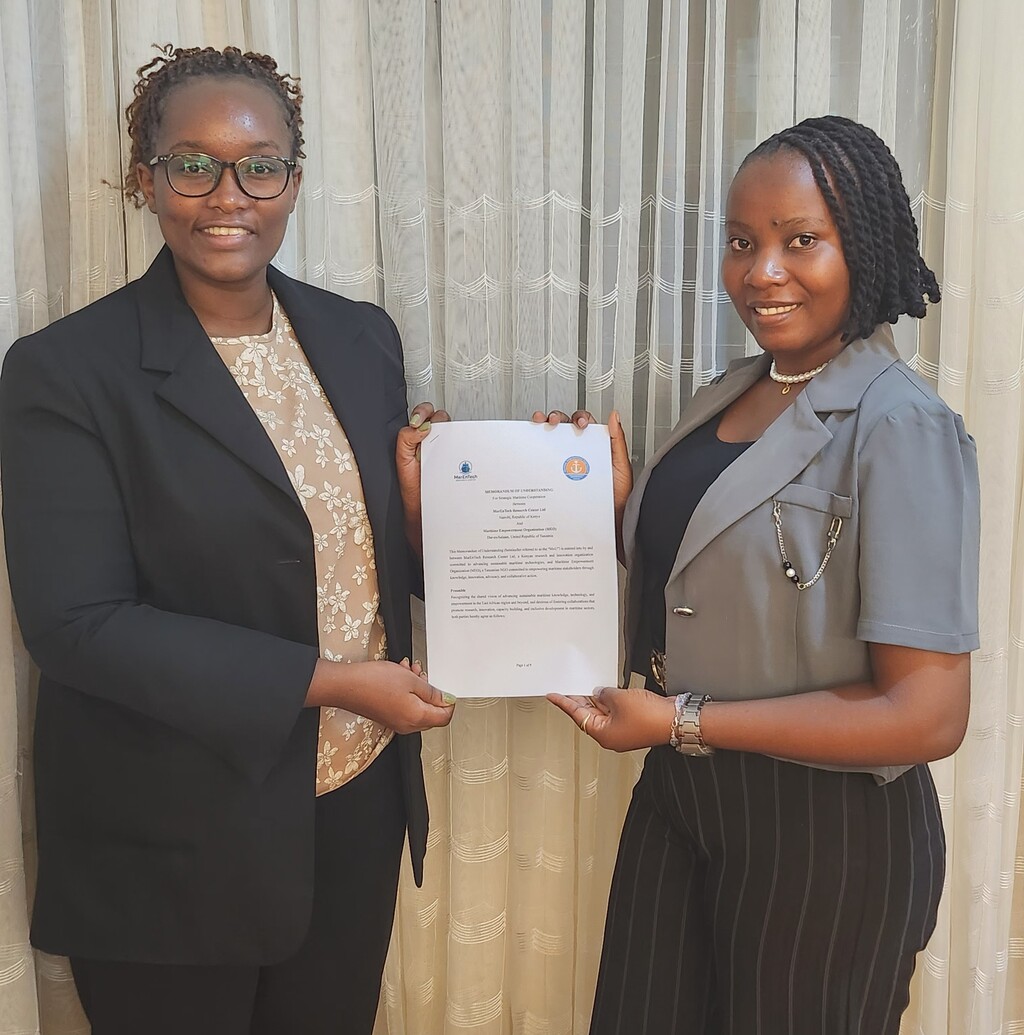
Commemorating MoU with the Maritime Empowerment Organization (MEO)

Commemorating MoU with the Maritime Empowerment Organization (MEO)